New month, new state-of-the-art. GPT-6 Astra leads the pack. Ox Alpha caused a stir as an anonymous model with no vendor that was crushing benchmarks - then turned out to be Z.ai’s GLM-5.3-Flash (open weights now released).
But let’s turn our gaze to the physical world. It has been an equally exciting month down there.
OpenAI showed off Jalapeño at Hot Chips - their own inference chip, which is the infrastructure we’re paying for when we buy tokens. Google, Amazon and Microsoft already have their own. Anthropic has confirmed it's starting. Independent vendors like Cerebras are already selling. Spicy indeed.


Apple stumbled into the same inference argument almost by mistake. A few months ago, everyone went crazy for the Mac Mini - it has now refreshed the Mac Studio, and given it pretty mental AI processing capabilities.
But it’s expensive. I priced up the top spec - a mere S$27k. Should I add AppleCare+? Seems important 😉

Not that you can actually buy one. The waitlist is months long - OpenAI alone allegedly bought tens of thousands.
Scaling up from the silicon: at the World Humanoid Robot Games in Beijing, an X-Humanoid robot ran the 100m in 8.86 seconds and cleared 2.88m in the high jump, both beating human world records. The long jump is still ours - for how long? I highly recommend watching the failure reel: ABSOLUTE CINEMA.
Closer to the home lab, Hugging Face is selling the “Microduck” for $399 - a 25cm biped, 15 motors, camera, LiDAR, and the whole AI software stack open on GitHub. Train a behaviour like dancing or following in simulation, then deploy it to the duck. Marvellous.
Its siblings sit in the same bracket. Reachy Mini from $399. Petoi's Bittle from $269. LeRobot's SO-101 arm from about $100 if you print the parts yourself. A walking biped now costs less than a phone.
Maybe that’s the next MISSION+ space - a bar for people to watch robot sports, tinker with robot kits and eat pizza. Maybe I’ve just found my retirement plan!

Reflections On The Mission
Spec Driven Development was the first unlock for agentic engineering, but other best practices are now entering maturity.
We are shifting to remote agents. The moment agents were running from a command line, remote execution was inevitable. We all work across multiple computers - including our phones! - so it’s the difference between editing a local document and collaborating on the version in the cloud.
Remote agents also make parallelism easier, plus coding agent hand-offs: one agent writes the code, another verifies - communicating via a shared document or message queue such as the GitHub PR.
Running multiple remote agents requires a centralised operating interface. Whether this is Vibe Kanban, herdr or just integrated with Jira - it needs to come together somewhere.
The ‘shape’ of agentic skills has settled. We’ve transitioned from holistic, methodology-shaped approaches (the BMAD method with its agent personas, Superpowers with its enforced flow) to individual task-based packs (Matt Pocock’s skills, Poteto’s pstack) where you might only use one or two.
Repo-level specifications are great for describing functionality within that repository's scope. But not all specifications work this way - sometimes an application is made up of multiple repositories; sometimes specifications are mandated across multiple applications.
For formal, versioned specifications, an approach like OpenSpec’s “Stores” makes sense - these exist in their own repository and are resolved by OpenSpec on demand. Other parts of the specification probably work better by being pulled in from Confluence or Notion - brand guidelines being the obvious example.
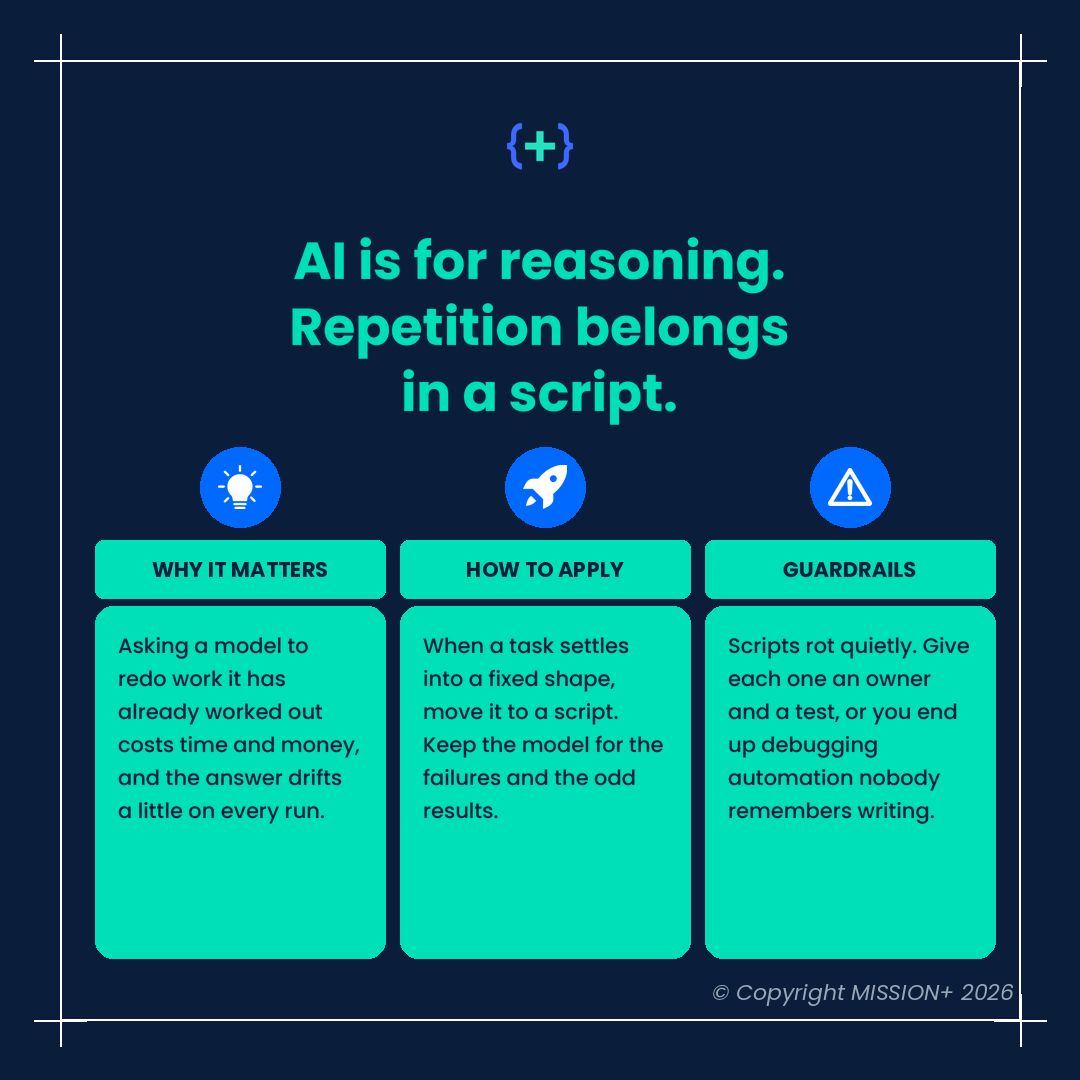
AI is for reasoning, discovery & analysis. Not for burning through tokens for the same intelligence over and over again. Yet that’s what we seem to keep doing. Instead, we should move repetitive tasks to deterministic scripts, and have AI handle failures or analyse abnormalities. Agentic testing becomes Playwright automation plus AI error triage.
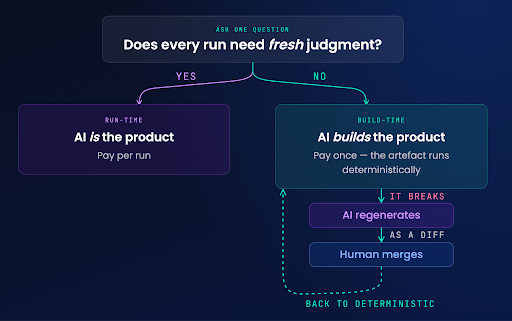
Put all this together, and our applications are becoming ‘evergreen’ - paying off technical debt as it arises. The evergreen application is tied to an agent that periodically bumps framework & library versions, scans through error logs & bug reports, executes vulnerability and penetration testing, trawls customer feedback on the App Store or Trustpilot - then fixes and verifies any issues.
The Agent Centric Development Cycle (ACDC 🤘) is maturing, and I love it.
Interesting Links
MAS to invest S$220 million in fintech innovation, targets frontier tech and talent - great to see this program renewed, Singapore leads the way!
Black Hat USA 2026 | The 'Breaking' News: The OpenAI–Hugging Face Incident - yeah so this isn’t terrifying at all.
Novice Mount Shasta climbers rescued after relying on Gemini AI to plan trip - so much to unpack here. “Although the climbers said they did not feel well, they pushed forward.” I love the enthusiasm. This is up there with “GPS told me to drive into the lake”.
This Is The Way
We’re On A Mission



Until next month. Together, We Build {+}
Ned & the MISSION+ team
P.S. If you would like to bring the MISSION+ team into your organisation to help, please reach out to [email protected]!