As I've been doing more and more agentic engineering, I'm increasingly "letting go" and letting the agent make decisions. This increases velocity dramatically, but obviously introduces a whole new set of questions. How do I know the code is fit for purpose? How do I enforce quality? Are there any security concerns?
I have been perfecting two frameworks that try to address this:
- The Agent-Centric Development Cycle (ACDC) - how to transform the development lifecycle given the capabilities of AI agents
- The Agentic engineering Target Operating Model (ATOM) - how to transform the tech organisation given the introduction of ACDC
The two groupings of approach are "preventative" and "corrective".
Preventative
The more detailed the specification given to your agent, the more likely it is to produce the results you intended. This is precisely the opposite of "vibe" coding, where you just iteratively go with the flow. Instead, "Spec Driven Development" is all about structuring your product idea as clearly as possible, letting the agent do its thing, then verifying the results. Improvements and clarifications are fed back into the spec, and the process reruns.
The preventative controls are the instructions that live within your markdown files and tell your agents what to do.
Corrective
Agentic harnesses now have the ability to automatically spin up your code and test it against your specification. Claude Code, Codex and Cursor can all run your application, execute your test suite and verify that the output matches intent - without you lifting a finger. This is a massive shift. The agent writes the code, then validates the code. Done.
Cross-model verification takes this a step further. OpenAI recently released an official Codex plugin for Claude Code that lets you use the Claude model to write the code and a completely different OpenAI model to review it. A single model reviewing its own work is like marking your own homework. A second model from a second provider introduces genuine adversarial tension - it has different training, different biases, different blind spots. A multi-agent review loop that is far harder to fool with sycophancy.
Finally there's SonarQube, which now auto-detects AI-generated code and applies targeted security and quality scanning. Sonar reports that 42% of all committed code is now AI-generated or assisted. External scanning tools like Sonar act as an independent quality gate: they don't care who or what wrote the code, they just tell you if it's any good.
Insurance
I have a theory that insurance may enter the game. We already have Errors & Omissions (E&O) insurance that protects businesses against claims of mistakes or negligence. This concept could be extended to code that has been generated by AI agents.
But insurers aren't going to underwrite any old vibe coder. In a similar way to how they use frameworks and attack surface to evaluate cyberrisk, they would need to see evidence of a systematic, structured approach to agentic engineering. Where are the guardrails, where are the verification gates, where are the sign-offs?
Mosaic x aiSure (specialist AI E&O underwriting backed by Munich Re) is the first offering I've seen which is approximately what I am describing, although for AI more generally rather than specifically for agentic engineering. But the basic concept is the same.
And wouldn't you, the customer, prefer to know that the software you were buying or consuming had been evaluated and backed by an insurer with money on the line? I know I would.
So yeah, let's stop mixing up vibe coding with something that is infinitely more structured.

Reflections On The Mission
The Luddites were very scared of the impact of technology on their way of life. They were textile workers in early 19th century England - skilled craftsmen who had spent years mastering their trade. The introduction of power looms and stocking frames threatened to make them obsolete overnight. So what did they do?
Out they came, and smashed the machinery. Organised raids, hammers swinging, frames splintering. They even had a name for their favourite sledgehammer: "Great Enoch", after the ironmonger Enoch Taylor who had built the very machines they were destroying. Poetic.
Nowadays, we laugh about the Luddites - it has even become a form of abuse, a pejorative. "Haha, you don't even know about the three seashells you Luddite!" Hilarious.
They were correct, but only in the short term. The impact was devastating: wages collapsed, skilled roles vanished, and those who resisted were met with mass arrests, public hangings, and penal transportation to Australia. The government deployed more troops against the Luddites than Wellington had taken to fight Napoleon in the Peninsular War.
If you were to take a Luddite and show them the quality of life of the average English citizen today, they wouldn't believe their eyes. The quality of food, of medicine, of leisure time would be kingly by Regency-era standards.
Someone joked to me about how in the future, perhaps we wouldn't have to do our own laundry. My friend - we already don't do our own laundry! Tell your great grandmother about how hard it is that you are forced to pick up a pile of dirty clothes, put it in a magic box, then take it out a couple of hours later and it's clean. Doing your own laundry involves a mangle and a beating stick.
Correct in the short term, fantastically wrong in the long term.
I like to think we're at a similar tipping point. Many people - including myself on dark days - lament about the end of jobs, the end of career progression, even the end of society. It's different this time, they say.
It's probably not. It's easy, nay lazy, to write off human adaptability and assume the worst. If we allow ourselves to dream then future generations will have access to medical care, education and nutrition that would be as kingly as the Luddite comparison suggests.
Nobody told the Luddite's grandchildren to become railway engineers. Nobody handed them a career brochure for "telegraph operator" or "factory inspector." Those jobs didn't exist yet. They couldn't exist yet - not until the world had finished rearranging itself around the new reality. The roles that will define the next fifty years of human work are, by definition, ones we cannot currently name.
The future is not today minus something. It's something else entirely. Something that will feel, to the people living in it, completely obvious and unremarkable.
Will the transition be painful? Obviously - it always is. The Luddites weren't wrong to be angry, and you're not wrong to be worried. The people who get hurt during these shifts are real people with real mortgages, and "it'll be fine in a hundred years" is cold comfort when you can't make rent in March.
But the destination? The destination is extraordinary.
Your great-grandchildren will look back at us, sitting in our ergonomic chairs, hand-crafting code letter by letter, eight hours a day, five days a week… and they will feel the same tender disbelief you feel when you imagine your great-grandmother beating shirts against a rock.
You did that? Every day? By choice?
Not by choice. We just hadn't built your world yet. Be optimistic, it’s worked every other time up to now.
Interesting Articles
- Shannon - An AI based autonomous, white-box AI pentester for web applications and APIs.
- I was a 10x engineer. Now I'm useless - thoughtful reflections on life as an engineer post agentic-engineering
- Claude Code for Everyone - Claude Code is not just for engineers. Everyone should pass this course as a rite of passage when becoming a man (or woman).
- Paperclip: Open-source orchestration for zero-human companies - this is either the future or a massive boondoggle. Would love to get feedback from people who have tried it in real scenarios.
This Is The Way

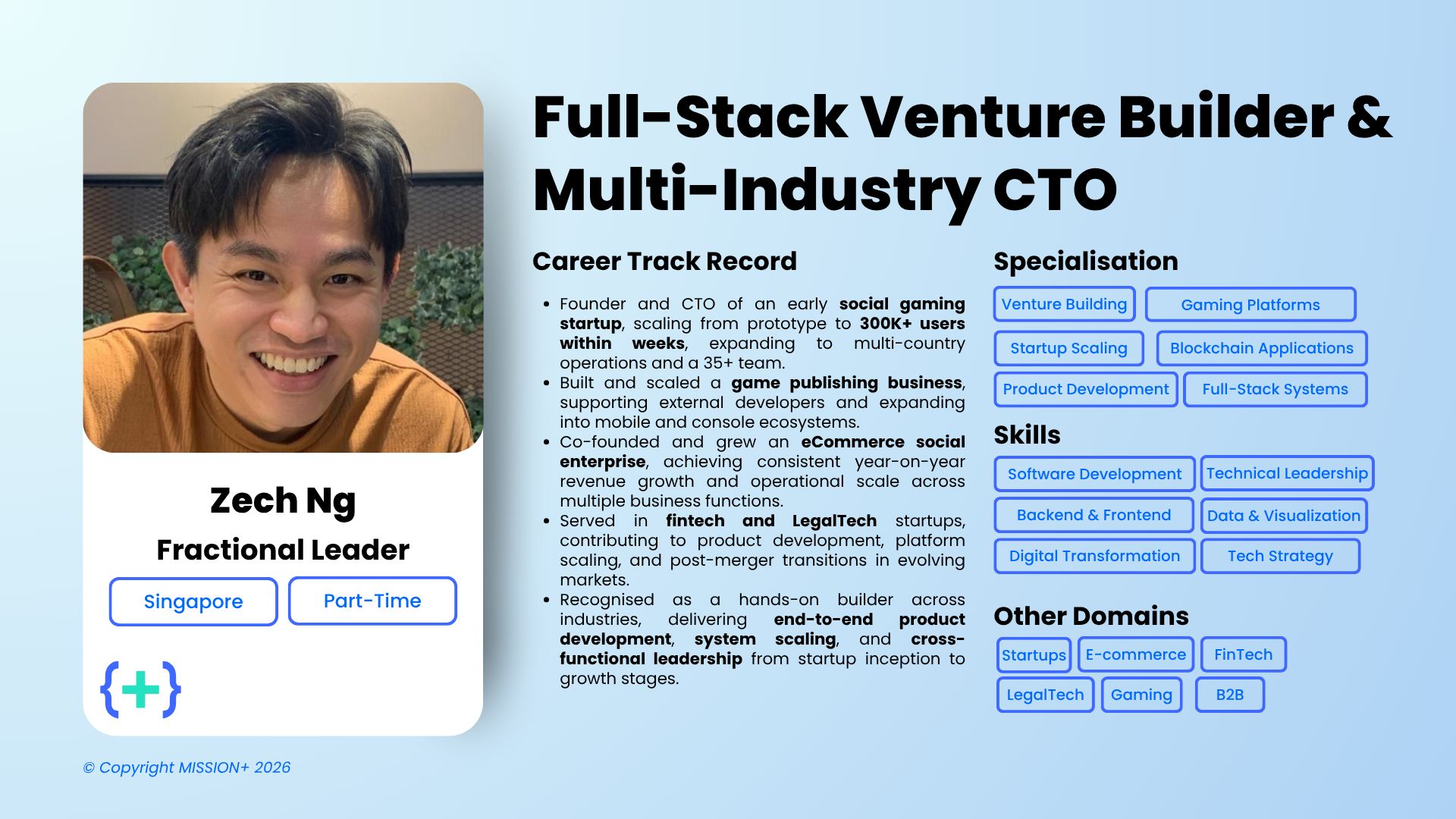
Feature A Fractional
We’re On A Mission
Until next month. Together, We Build {+}
Ned & the MISSION+ team
P.S. If you would like to bring the MISSION+ team into your organisation to help, please reach out to [email protected]!